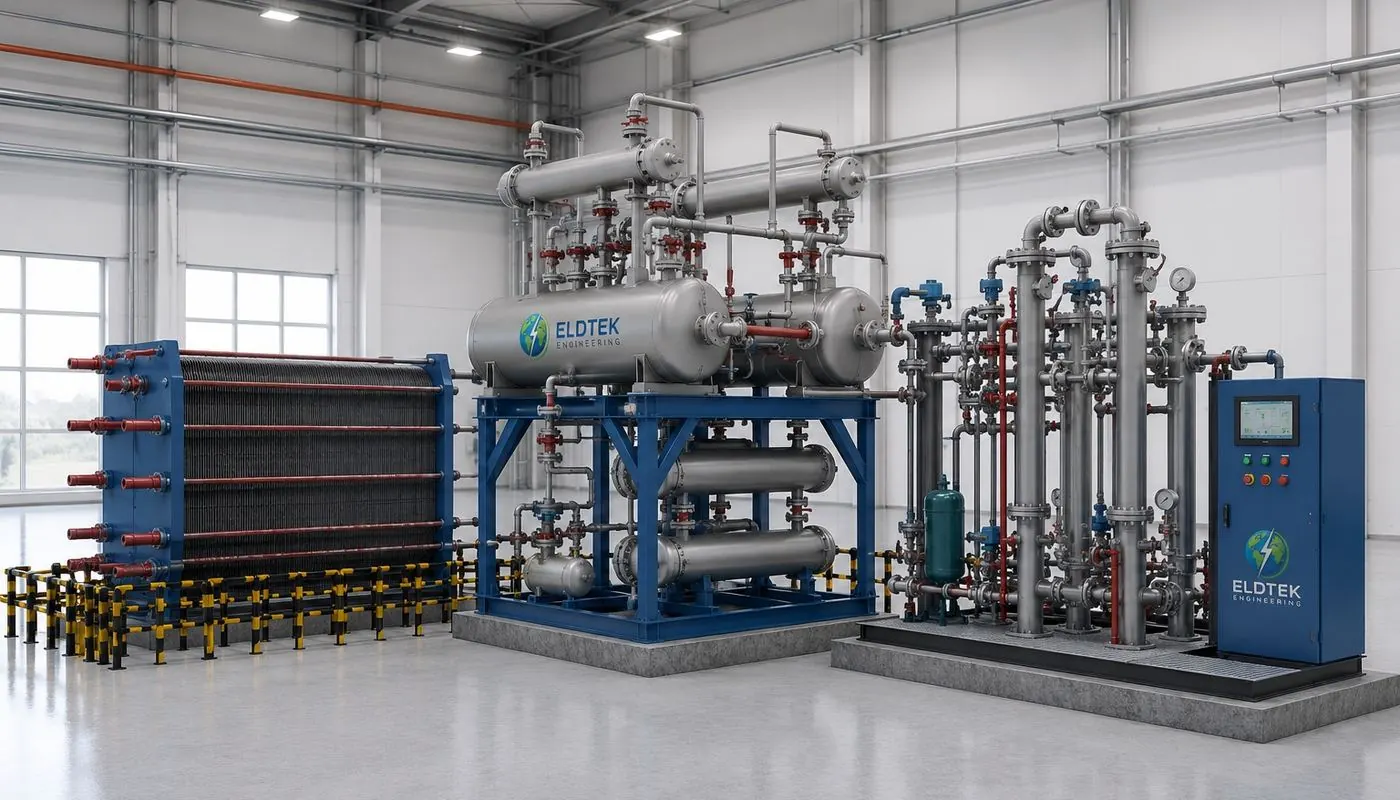
Hydrogen plant options and specifications
| Product | Key figures | Best suited to |
|---|---|---|
| AEM electrolyzers | Stack efficiency above 70%, operating pressure up to 35 bar. Stack life is confirmed for each project | Low-cost, efficient hydrogen using non-precious nickel catalysts |
| PEM electrolyzers | Figures on request | Maximum current density and rapid load-following with intermittent renewable energy |
| Complete hydrogen generation system | 10 to 1,000+ Nm³/h, 99.999% (5N) hydrogen purity, full balance of plant included | Fuel cell and industrial process users that want a turnkey plant |
| Ammonia cracker | Cracking at 650–900 °C, hydrogen above 99.9% purity, waste heat recovery, downstream PSA purification | Industrial users, refuelling stations and remote sites supplied with ammonia |
How hydrogen is made by water electrolysis
An electrolyzer uses electricity to split water into hydrogen and oxygen. Hydrogen is called green when the electricity comes from renewable sources such as solar or wind. Eldtek's systems work with solar, wind and grid power.
AEM and PEM electrolyzers
AEM (anion exchange membrane) electrolyzers aim to combine the low cost of alkaline technology with the efficiency and dynamic response of PEM. Eldtek's AEM stacks use non-precious nickel-based catalysts and a solid polymer membrane.
PEM (proton exchange membrane) electrolyzers are the choice for maximum current density and rapid load-following. Eldtek supplies PEM electrolyzers that are fully compatible with intermittent renewable energy.
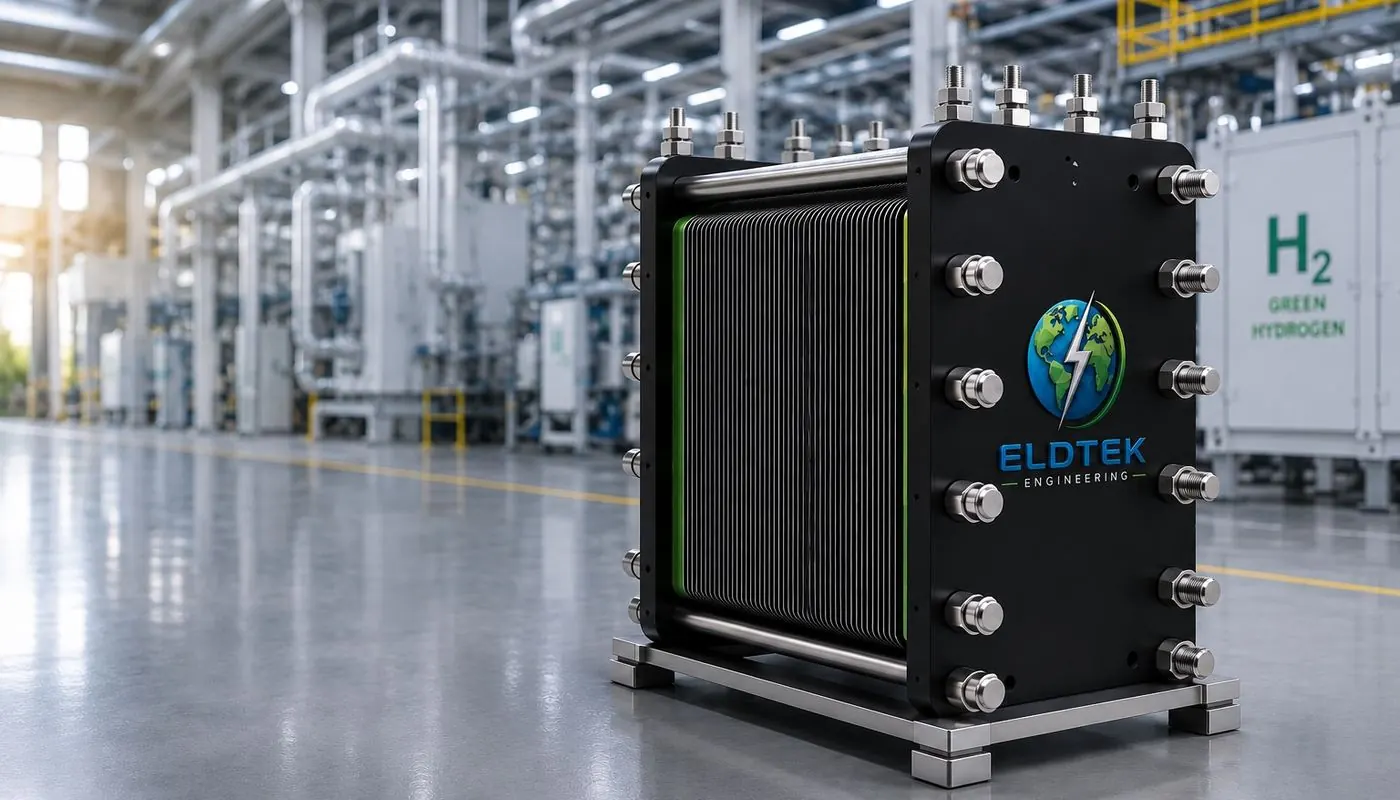
What a complete hydrogen generation system includes
Beyond the electrolyzer stack, Eldtek delivers the complete balance of plant (BOP):
- Power electronics
- Deionised water treatment
- Gas-liquid separation
- Drying and purification
- Compression and buffer storage
- Safety systems
The modular design scales from 10 Nm³/h to over 1,000 Nm³/h.
Ammonia cracking for pure hydrogen
Ammonia is an energy-dense, easily liquefied and globally traded hydrogen carrier. Eldtek's ammonia cracker uses a proprietary high-activity catalyst and an advanced reactor design to decompose NH₃ into nitrogen and hydrogen at 650–900 °C. Waste heat recovery reduces energy use, and a downstream PSA unit purifies the hydrogen to over 99.9%. The result is a compact, continuous hydrogen supply from ammonia delivered to site.
Hydrogen flow and mass: quick conversion
Plants are rated in Nm³/h, but many buyers think in kilograms. At normal conditions (0 °C, 1.013 bar) hydrogen has a density of about 0.0899 kg/Nm³.
| Plant output | Hydrogen per hour | Hydrogen per day (24 h) |
|---|---|---|
| 10 Nm³/h | 0.9 kg | 21.6 kg |
| 100 Nm³/h | 9.0 kg | 215.8 kg |
| 1,000 Nm³/h | 89.9 kg | 2,158 kg |
Electrolysis needs at least about 9 litres of water per kilogram of hydrogen, so a plant needs a reliable treated-water supply as well as electricity.
What we need to size your hydrogen plant
- The application, for example fuel cells, an industrial process or refuelling.
- Required capacity in Nm³/h or kg per day.
- Required purity and delivery pressure.
- Power source and availability, such as solar, wind or grid.
- Water supply, site constraints and, if relevant, access to ammonia.
Need a different gas? See Eldtek's nitrogen generation plants and oxygen generation plants.
Frequently asked questions
What is a hydrogen plant?
A hydrogen plant produces hydrogen on site. Eldtek's plants split water in AEM or PEM electrolyzers, and for sites supplied with ammonia, Eldtek also offers ammonia crackers.
How much does a hydrogen plant cost?
The price depends on the capacity in Nm³/h, the purity, the electrolyzer type (AEM or PEM), the power source and the site conditions, so Eldtek quotes each project after sizing. Send the details through the contact form or by email to projects@eldtek.com.
What sizes of hydrogen plant does Eldtek offer?
Eldtek's complete hydrogen generation systems scale from 10 Nm³/h to over 1,000 Nm³/h of hydrogen.
What hydrogen purity do Eldtek systems deliver?
Complete hydrogen generation systems are specified at 99.999% (5N) purity. The ammonia cracker delivers hydrogen at over 99.9% purity.
What is the difference between AEM and PEM electrolyzers?
AEM electrolyzers use a solid polymer membrane and non-precious nickel-based catalysts, aiming to combine the low cost of alkaline technology with PEM's efficiency and fast response. PEM electrolyzers suit maximum current density and rapid load-following.
Can the plant run on solar or wind power?
Yes. Eldtek's systems work with solar, wind and grid power, and its PEM electrolyzers are compatible with intermittent renewable energy.
What is included in the balance of plant?
Power electronics, deionised water treatment, gas-liquid separation, drying and purification, compression, buffer storage and safety systems.
How many kilograms of hydrogen is 100 Nm³/h?
About 9.0 kg per hour, or roughly 216 kg per day, using a hydrogen density of 0.0899 kg/Nm³ at normal conditions.
What is ammonia cracking?
Ammonia cracking splits NH₃ into nitrogen and hydrogen at high temperature over a catalyst. Eldtek's cracker operates at 650–900 °C and uses PSA purification to deliver hydrogen above 99.9% purity from ammonia.
How do I request a quotation?
Send the application, required capacity, purity and power source through the contact form or by email to projects@eldtek.com.